
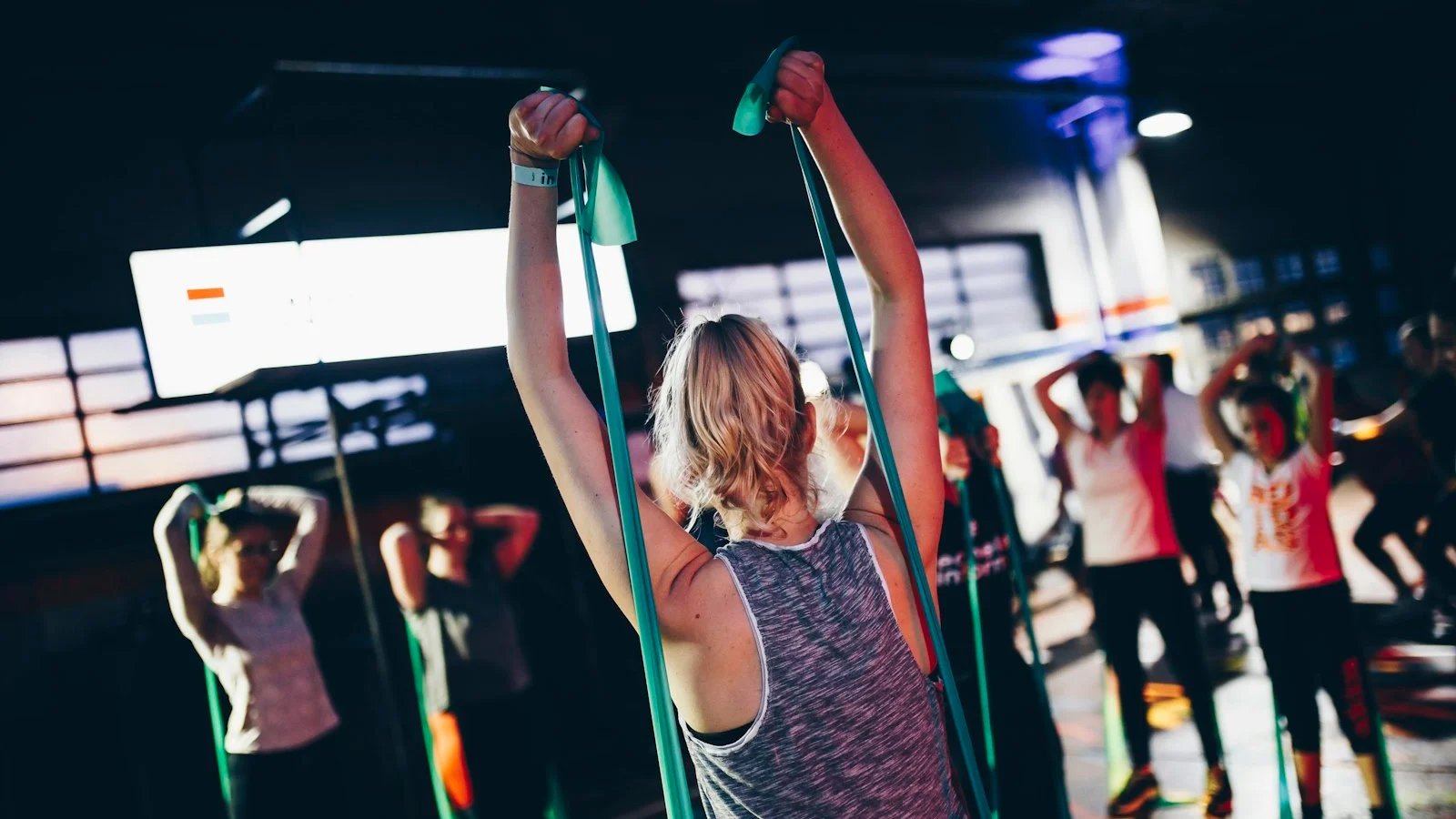
A fitness challenge is a short, time-boxed goal that a coach sets for a group of clients, with simple rules and a visible score. The best ones last two to six weeks, reward showing up over raw talent, and end with a clear next step for everyone who finished.
Key Takeaways
• Pick a challenge that fits your clients' level, then write the rules, length and scoring before you announce it.
• Score progress against each person's own starting point, so beginners can win too.
• In a 24-week trial, a competition game raised steps by 920 a day over a control group, and it was the only version still working 12 weeks after the game ended.
• Don't knock people out for one missed day: in habit research, missing one chance didn't materially affect habit formation.
• Screen new people with the PAR-Q+ and build up gradually. Plan the offer for finishers before day one.
We read four of the top-ranking fitness challenge lists for this search on November 5, 2026. None cited a study, few said how to score, and none covered safety or what happens after the last day. This guide fills those gaps.
How to choose the right challenge
Three questions narrow the list quickly:
- Who is it for? A challenge for new leads should be easy to start. One for current clients can be harder and more specific.
- What do you want to change? Pick one behavior: moving more, lifting, eating better or sleeping. Challenges that try to change everything at once are hard to score.
- How will you score it? If you can't explain the scoring in one sentence, simplify the challenge.
Goal | Good first pick | Length |
|---|---|---|
More daily movement | Step ladder (idea 1) | 4 weeks |
Strength | Personal record month (idea 6) | 4 to 6 weeks |
Fitness | Monthly benchmark retest (idea 11) | 4 weeks |
Nutrition | Protein target streak (idea 13) | 3 to 4 weeks |
Recovery | Seven-hour sleep challenge (idea 17) | 2 to 3 weeks |
Community and leads | Team step battle (idea 21) | 2 to 4 weeks |
21 fitness challenge ideas
Each idea lists the rules, length, how to score it, and who it suits. Scale every target to the person, not the group.
Movement and steps
1. Step ladder. Each client sets a baseline from their first week, then adds about 1,000 steps a day each week. Length: 4 weeks. Score: days the daily target was hit. Suits: beginners and desk workers. For the end goal, use age-based targets rather than a blanket 10,000. A meta-analysis of 15 cohorts found the risk of death kept falling until 6,000 to 8,000 steps a day in adults 60 and over, and 8,000 to 10,000 in younger adults (Paluch et al., 2022, Lancet Public Health).
2. 150-minute week. Log at least 150 minutes of moderate activity each week, the minimum in the US guidelines (Physical Activity Guidelines for Americans, 2nd edition). Length: 4 weeks. Score: weeks completed. Suits: anyone getting back into training.
3. Walk after meals. A 10-minute walk after at least one meal a day. Length: 3 weeks. Score: walks logged. Suits: busy clients and older adults.
4. Move every hour. Stand up and move for two minutes every waking hour on workdays. Length: 2 weeks. Score: workdays completed. Suits: office workers. The guidelines say adults should "move more and sit less throughout the day."
5. Distance as a group. The group walks or runs a combined distance, such as the length of a famous route. Length: 4 weeks. Score: total distance against the goal. Suits: mixed levels, because everyone's distance counts.
Strength
6. Personal record month. Each client picks one lift and tries to beat their best set in four weeks. Length: 4 to 6 weeks. Score: percentage improvement on their own starting number. Suits: clients who already lift.
7. Two strength days a week. Do muscle-strengthening work on at least two days every week, as the US guidelines recommend for adults. Length: 6 weeks. Score: weeks completed. Suits: beginners and cardio-only clients.
8. Push-up progression. Test max push-ups, then train them three times a week from an incline or the knees if needed. Length: 4 weeks. Score: improvement on the first test. Suits: beginners to intermediates.
9. Plank ladder. Add five seconds to a front plank hold every few days, with a side plank on alternate days. Length: 3 weeks. Score: days completed. Suits: beginners. Set a maximum hold, so the score rewards consistency rather than endurance alone.
10. Squat consistency. A set number of bodyweight or goblet squats a day, starting low and adding a few reps each week. Length: 4 weeks. Score: days completed. Suits: beginners and older clients. Daily "100 burpees" style challenges skip this build-up, which goes against the guidelines' advice to increase gradually.
Conditioning
11. Monthly benchmark retest. Test a short workout, such as a 12-minute AMRAP, in week one and again in week four. Length: 4 weeks. Score: percentage improvement. Suits: group classes and online clients.
12. EMOM streak. Three EMOM sessions a week, adding one round each week. Length: 4 weeks. Score: sessions completed. Suits: intermediates who like structure.
Nutrition
13. Protein target streak. Hit a daily protein target. For most active people, 1.4 to 2.0 g per kg of body weight a day is enough (Jäger et al., 2017, ISSN position stand). Length: 3 to 4 weeks. Score: days on target. Suits: clients who already log food.
14. Fruit and veg count. Eat a set number of fruit and vegetable servings a day. Few people do: in 2019, 12.3% of US adults met the fruit recommendation and 10.0% met the vegetable one (Lee et al., 2022, CDC MMWR). Length: 3 weeks. Score: days on target. Suits: everyone.
15. Fibre up. Work toward 14 g of fibre per 1,000 calories, the Adequate Intake. The average US intake is 17 g a day (Dahl and Stewart, 2015, Academy of Nutrition and Dietetics). Length: 3 weeks. Score: days on target. Suits: clients who log food.
16. Cook at home. Cook a set number of meals a week and post a photo. Length: 4 weeks. Score: meals cooked. Suits: clients who eat out often.
Sleep and recovery
17. Seven-hour sleep challenge. Aim for at least seven hours a night, the amount the American Academy of Sleep Medicine recommends for adults aged 18 to 60 (AASM, 2015). Length: 2 to 3 weeks. Score: nights at seven hours or more. Suits: stressed or tired clients.
18. Wind-down routine. Same bedtime, and screens off 30 minutes before it. Length: 3 weeks. Score: nights completed. Suits: clients whose sleep varies a lot.
19. Mobility minutes. Ten minutes of mobility a day, from a short routine you send. Length: 3 weeks. Score: days completed. Suits: lifters and desk workers.
Habits and community
20. One-habit streak. Each client picks one small habit, such as a daily walk or a glass of water with each meal. Length: 4 weeks. Score: days completed, with missed days allowed. Suits: beginners.
21. Team step battle. Split clients into teams that compete on average daily steps. Length: 2 to 4 weeks. Score: team average, so team size doesn't matter. Suits: groups, gyms and lead generation.
How to score a challenge fairly
Raw totals reward the fittest people, and everyone else gives up in week one. Fairer options:
- Improvement on their own baseline. Measure week one, then score the percentage change.
- Adherence points. One point for each day or session done, so effort counts more than talent.
- Team averages. Average scores, not totals, so a small team can still win.
Competition helps, but design it well. In the STEP UP trial, 602 adults were given a 24-week step game with points and levels. The competition version raised daily steps by 920 over a control group. Support and collaboration versions raised them by 689 and 637. After the game ended, only competition still had a significant effect, at 569 extra steps a day (Patel et al., 2019, JAMA Internal Medicine).
Small rewards can help too. A review of 23 trials found modest incentives, around $1.40 a day, increased steps during the program and after the incentives stopped. The authors noted the follow-up results were mixed (Mitchell et al., 2020, British Journal of Sports Medicine).
Keep it safe
- Screen new people. Anyone who isn't already a client completes the PAR-Q+ before day one.
- Start low and go slow. The US guidelines tell inactive people to start with lower intensity and increase how often and how long gradually.
- Scale for age and level. Use the age-based step targets above, and give every strength challenge an easier version.
- Don't punish a missed day. In a study of people forming a new habit, it took between 18 and 254 days for the habit to become close to automatic. Missing one opportunity "did not materially affect the habit formation process" (Lally et al., 2010, European Journal of Social Psychology).
Stay within the rules
If you share winners' results, the FTC's Endorsement Guides apply. Saying "results not typical" isn't enough. You need proof the results are typical, or a clear statement of what people can generally expect (FTC, Endorsement Guides FAQ).
The FTC also bans giving incentives on condition that people write reviews with a particular sentiment, such as only 5-star ones (FTC, 2024 rule on fake reviews). Prize draws may be regulated by state law, so award prizes for results or effort, and check with a lawyer if people pay to enter.
Worked example: a four-week step ladder
This is an example, to show how the pieces fit together.
A coach has 14 online clients and 30 people on an email list. She announces a free four-week step ladder for clients and the list. Everyone new completes the PAR-Q+ and logs a baseline week.
Each person's target rises by about 1,000 steps a day each week, capped at an age-based goal. Scoring is adherence points: one per day on target. Missing a day costs a point, not a place. A group chat gets one message a day from the coach, and the top three by points win a free session.
In week three, she tells finishers about a four-week coaching offer that starts the Monday after the challenge. In the STEP UP trial, most of the gains faded once the game ended, so the offer gives people a reason to keep going.
Turn finishers into clients
- Plan the offer before day one. A short program or a discounted first month works well, starting right after the challenge.
- Use the data. Send each finisher their before and after numbers with a personal note.
- Ask for feedback, not 5-star reviews. It's honest, and it keeps you within the FTC rule.
- Keep the group going. A monthly retest gives people a reason to stay.
Our guides on personal training packages and small group training cover how to price what comes next.
Run challenges in TrainBlock
Running a challenge from spreadsheets and messages is a lot of manual work. In TrainBlock, launching in January 2027, you'll add a custom metric such as steps to each client's plan, with reminders on the days it's due, and see their progress over time. You can run the challenge in a group chat and send a weekly check-in form for scores and feedback. Join the waitlist: the first 100 coaches get 6 months free.
Step by step in the TrainBlock Help Center: plan what clients log and create a group chat.
Frequently asked questions
How long should a fitness challenge last?
Two to six weeks works for most groups. It's long enough to see progress and short enough to keep energy up. For habits, plan for longer, since habit formation took 18 to 254 days in research.
Should fitness challenges be free?
Free challenges work well for finding new clients. For current clients, include them in coaching. If people pay to enter, award prizes for results or effort, not by random draw, and check your state's rules.
What's a good challenge for beginners?
A step ladder or a one-habit streak. Both start from the person's own level, and neither needs equipment.
How do I keep people engaged after week one?
Score adherence rather than raw totals, post one short update a day, and let people miss a day without losing their place.
Editorial note
Every study and official guideline cited in this guide was fact-checked against its original source on November 5, 2026.