Tabata is an interval workout of 8 rounds of 20 seconds of all-out effort and 10 seconds of rest: 4 minutes in total. It comes from a 1996 study by Izumi Tabata, where it improved both aerobic fitness and anaerobic capacity. Most "Tabata" classes today are a lighter version of that protocol.
Key Takeaways
• The original Tabata protocol was 7–8 rounds of 20 seconds at about 170% of VO2max, with 10 seconds of rest, on an exercise bike.
• After 6 weeks, it raised VO2max by 7 ml/kg/min and anaerobic capacity by 28%.
• A 20-minute bodyweight Tabata workout averaged 86% of max heart rate and 240–360 calories.
• Interval training cut slightly more fat mass than moderate cardio in a meta-analysis, but body fat percentage changed equally with both.
• Program it as a finisher once or twice a week, on equipment that's safe to use when the client is exhausted.
What is Tabata training?
Interval training alternates hard work with rest or easy recovery. Tabata is one specific interval protocol: 20 seconds of work, 10 seconds of rest, repeated 8 times. Because the rest is half the length of the work, fatigue builds quickly, and the last rounds are very hard.
In the original study, the work wasn't just hard. It was set at about 170% of each person's VO2max on a mechanically braked exercise bike. VO2max is the most oxygen a person can use during exercise, the standard measure of aerobic fitness. Working at 170% of it means riding well above what aerobic metabolism alone can supply.
That's why a true Tabata only lasts 4 minutes. Most clients won't reach that intensity, and that's fine, as long as you know the difference.
What did the original Tabata study find?
The 1996 study ran two experiments (Tabata et al., 1996, Medicine & Science in Sports & Exercise).
In the first, people trained at moderate intensity: 70% of VO2max for 60 minutes, 5 days a week, for 6 weeks. VO2max rose from 53 to 58 ml/kg/min, but anaerobic capacity didn't change.
In the second, seven people did the 20/10 protocol to exhaustion, 5 days a week, for 6 weeks. VO2max rose by 7 ml/kg/min, and anaerobic capacity rose by 28%. Anaerobic capacity is how much energy the body can produce without oxygen, the system that powers short, all-out efforts.
A follow-up study explained why (Tabata et al., 1997, Medicine & Science in Sports & Exercise). The 20/10 protocol taxed both the aerobic and the anaerobic systems almost to their maximum. A different protocol, 30 seconds at 200% of VO2max with 2 minutes of rest, didn't. The short rest is what makes Tabata work.
Both studies were small lab studies of fit volunteers on a bike. Treat the numbers as what the protocol can do at full intensity, not what a typical client will get.
True Tabata vs gym Tabata
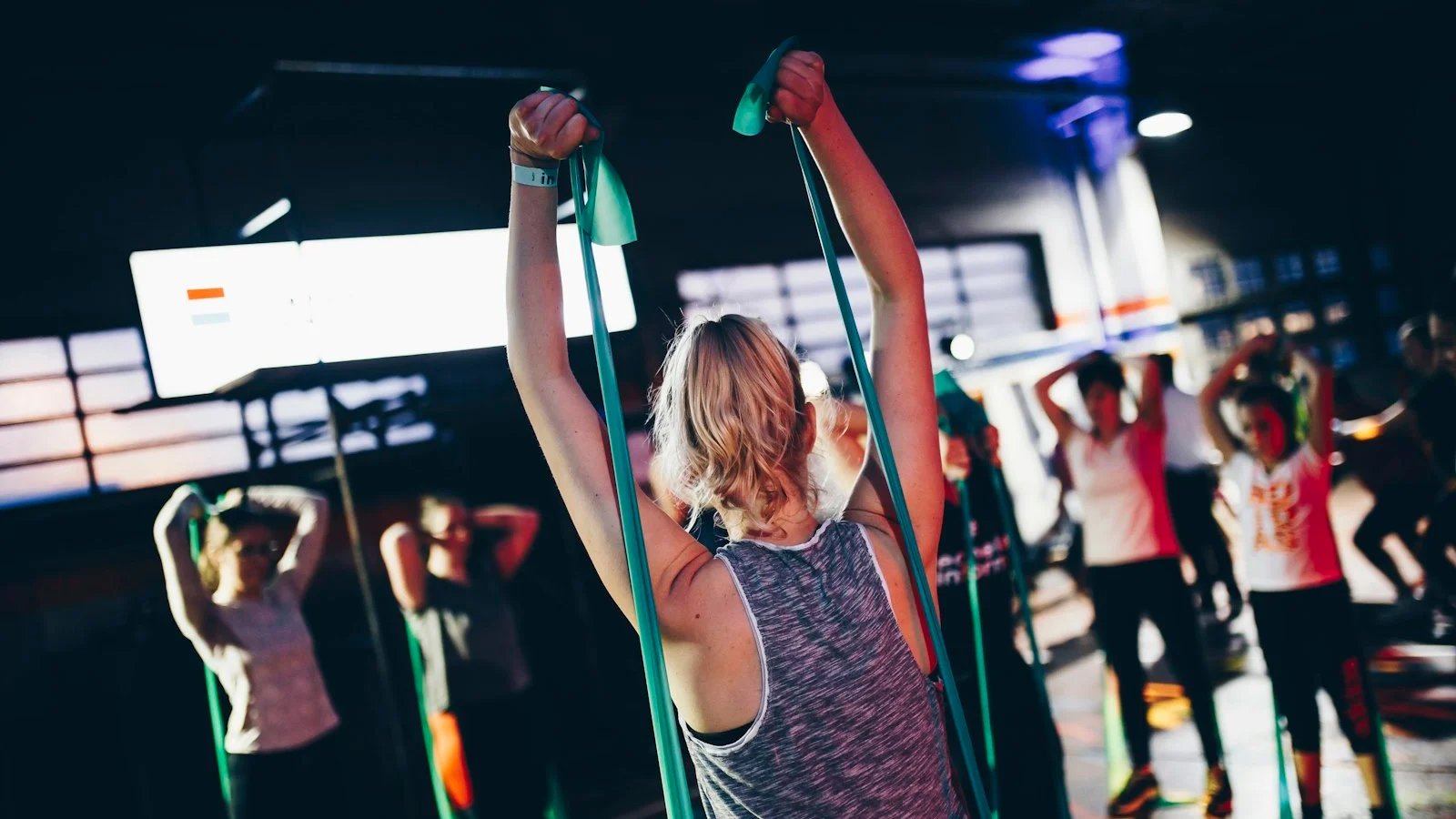
Most Tabata workouts in gyms use bodyweight or kettlebell exercises, often in several 4-minute blocks. That's a different workout from the one in the study.
Original Tabata | Typical gym Tabata | |
|---|---|---|
Equipment | Mechanically braked exercise bike | Bodyweight, kettlebells, rowers, bikes |
Intensity | About 170% of VO2max, to exhaustion | Hard, around 15 out of 20 on a perceived effort scale |
Length | One 4-minute set | Often four 4-minute blocks, about 20 minutes |
What it trains | Aerobic and anaerobic capacity, close to their maximum | Vigorous conditioning |
The gym version still works as cardio. In one study, 16 trained volunteers did a 20-minute workout of four Tabata blocks: high knees, burpees, squats, push-ups and other bodyweight moves (Emberts et al., 2013, Journal of Sports Science & Medicine). Heart rate averaged 86% of maximum, effort was rated "hard", and the session burned 240–360 calories.
That's vigorous exercise by any standard. It's just not the all-out effort of the original study, so don't promise clients the original results.
Is Tabata good for fat loss?
It helps, but it isn't a shortcut. A meta-analysis of 36 studies compared interval training with moderate-intensity continuous cardio (Viana et al., 2019, British Journal of Sports Medicine). Both reduced body fat percentage, with no difference between them. Interval training led to 28.5% greater reductions in total fat mass in kilograms.
For coaches, the practical point is time. Tabata gets a client a hard conditioning session in 4 to 20 minutes, which suits busy clients. Fat loss still depends mostly on nutrition and total activity across the week, so treat Tabata as one tool in the plan, not the plan.
Who should do Tabata, and who shouldn't
Tabata is one of the hardest things you can program, so screen first. Every new client should complete a PAR-Q+ form before training. Anyone who answers "yes" should finish its follow-up pages before you program maximal efforts.
- Good fit. Clients with a base of fitness who want conditioning in less time.
- Start easier. Beginners and returning clients, with 20 seconds of work and 20–40 seconds of rest, and fewer rounds.
- Not a fit. Clients who are injured, unwell, or not yet cleared for vigorous exercise.
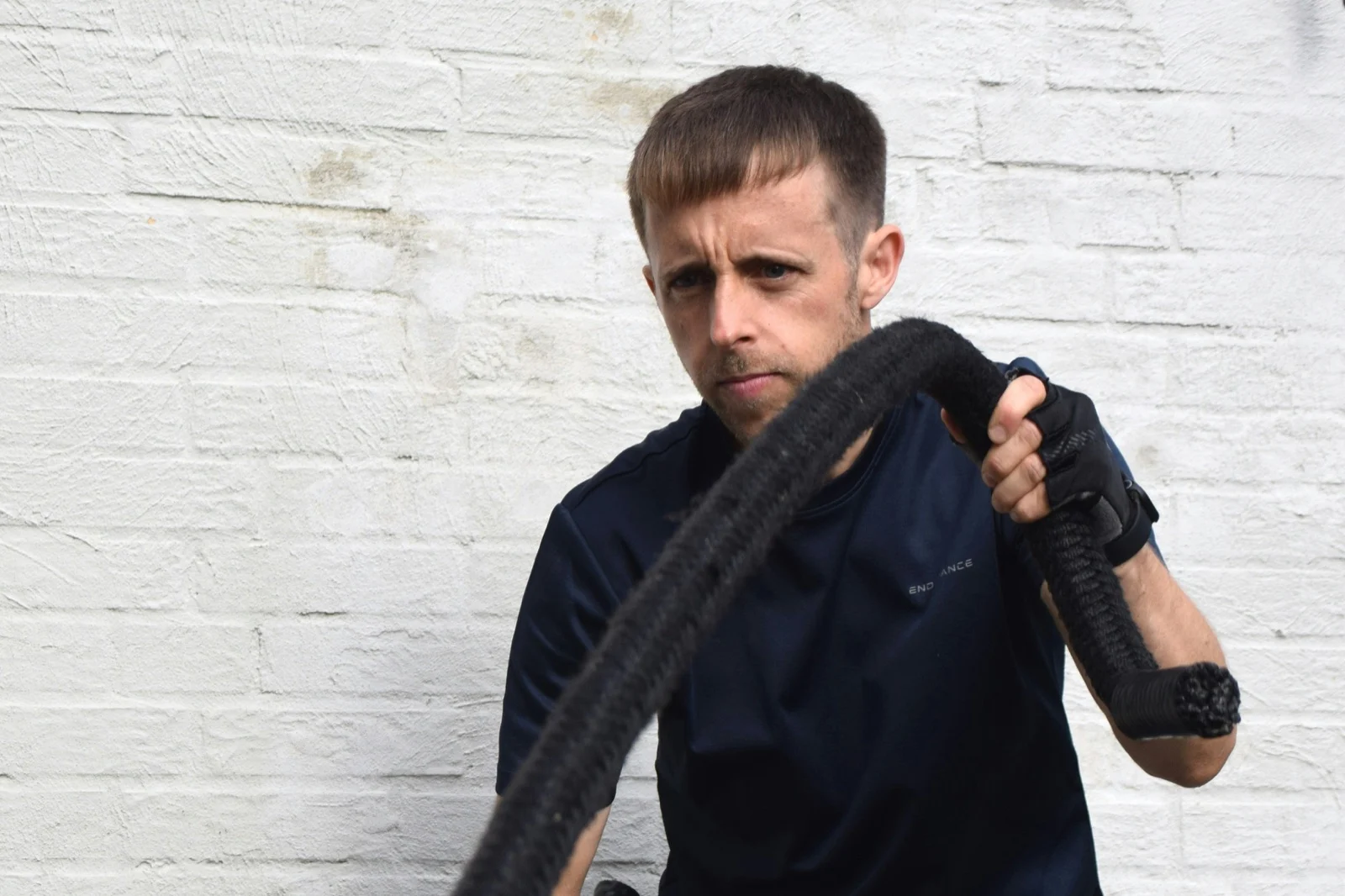
Exercise choice matters more than in most workouts. By round six, technique gets worse, so use movements that stay safe when the client is exhausted. Bikes, rowers, sled pushes and simple bodyweight moves work well. Leave heavy barbell lifts and high-skill movements, such as snatches or box jumps, out of the last rounds.
How to program Tabata for a client
Use Tabata as a finisher after strength work, or as a short standalone conditioning session. Once or twice a week is enough for most clients, since it's hard to recover from. Keep it away from the day before heavy lower-body training.
Worked example. A client trains strength three days a week and wants better conditioning. Add a bike Tabata at the end of two of those sessions, and progress it over a 6-week block:
- Weeks 1–2. 6 rounds of 20 seconds hard and 20 seconds easy.
- Weeks 3–4. 8 rounds of 20 seconds hard and 10 seconds easy: a full Tabata.
- Weeks 5–6. Two full Tabata blocks, with 2 minutes of easy pedaling between them.
Track the same number each time, such as calories or distance per round. If round 8 is far below round 1, the client went out too hard. Effort targets help, and our guide to RIR and RPE explains how to use the RPE scale with clients. Pull the Tabata out during a deload week.
Build Tabata workouts in TrainBlock
Writing "8 × 20/10" in a notes field leaves clients to time it themselves. In TrainBlock, launching in January 2027, the workout builder has timed circuits, with a one-tap Tabata preset of 8 rounds of 20 seconds on and 10 seconds off. Add it as a finisher after the strength work, and clients see it on their phone with the rest of the session. Join the waitlist: the first 100 coaches get 6 months free.
Step by step: how to add a Tabata interval block in the TrainBlock Help Center.
For other ways to fit more work into less time, see our guides to supersets and EMOM workouts.
Frequently asked questions
Is a 4-minute Tabata enough?
At the original intensity, yes. That's how the 1996 study was run. At the intensity most clients reach, a single block is a good finisher, and two to four blocks make a full conditioning session.
How many times a week should clients do Tabata?
Once or twice for most clients. In the study, people trained 5 days a week, but they were fit volunteers in a 6-week trial, not clients balancing strength training, work and family.
Can you do Tabata with weights?
Yes, with care. Kettlebell swings, dumbbell thrusters and sled pushes work for clients who already move well. Choose loads they can handle with clean technique in round 8, not just round 1.
What's the difference between Tabata and HIIT?
HIIT (high-intensity interval training) is the umbrella term for any workout that alternates hard efforts with recovery. Tabata is one specific HIIT protocol, with fixed 20-second efforts and 10-second rests.
Editorial note
Every study cited in this guide was fact-checked against its original source on October 17, 2026.